This Week in Space 215 Transcript
Please be advised that this transcript is AI-generated and may not be word-for-word. Time codes refer to the approximate times in the ad-free version of the show.
Rod Pyle [00:00:00]:
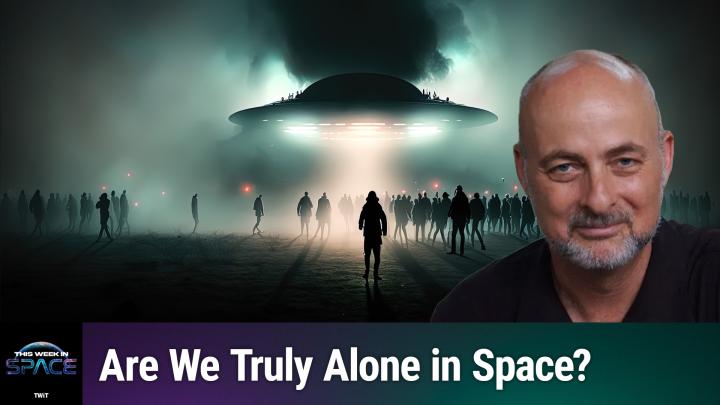
Hey, space fans. The Spielberg movie Disclosure Day has dropped on us and opinions are decidedly mixed. But more importantly, it makes us think once again about what the truth might be. Best selling science fiction Author and scientist Dr. David Brin joins us to dissect these aliens.
Rod Pyle [00:00:27]:
This is This Week in Space, episode number 215, recorded on June 19, 2020, 2026: Disclosure Day. Hello, and welcome to another episode of This Week in Space, the Disclosure Day edition. I'm Rod Pyle, editor-in-chief of Ad Astra Magazine. I'm here with my guest host, Sue Karlin, a scribe and dear friend who writes about space science and technology for outlets like Fast Company and who makes a real living as a space science tech journalist, which is pretty cool. So congratulations, sue, and welcome to the show.
Susan Karlin [00:00:59]:
Thank you, thank you. Great to be here.
Rod Pyle [00:01:02]:
Now, today, we're going to have the privilege of speaking in a few minutes with one of the most brilliant minds of the realm of Sci-Fi, Dr. David Brin, about Disclosure Day and other things. Because when you're talking to David, it's really difficult to contain the conversation in one area because he's so smart. It goes off here and that connects to there, and then we're over there and the next thing you know, I'm using my dribble cup because I can't keep up. But we're going to talk about both the movie and the. How do I put this? The real world of aliens, if there is such a thing. But first, we have a space joke from loyal listener Thomas Fish. Hey, Sue.
Susan Karlin [00:01:43]:
Hey. What?
Rod Pyle [00:01:44]:
What form of currency will humans use to transact business with alien civilizations?
Susan Karlin [00:01:51]:
Well, I mean, my first choice would be food because I feed everybody. So if I ever met alien. Oh, oh, that's not it.
Rod Pyle [00:02:00]:
No, the real answer were you to respond properly, my joke say, gosh, Rod, I don't know. Oh, what foreign currency would they use?
Susan Karlin [00:02:06]:
Gosh, Rod, I don't know. What foreign currency would they use?
Rod Pyle [00:02:11]:
Starbucks.
Susan Karlin [00:02:12]:
Oh, okay, well, well, okay. I was close right along. I said food. Okay, I was good.
Rod Pyle [00:02:24]:
Now, I've heard that some people want to put us in the galactic bean grinder when it's joke time in this show. But you can help by sending us your worst, best or most indifferent space joke: twis@twit.tv. We'll be happy to blame it on you in the air and you can take some of the heat for these punchlines. But first, instead of headline news today, we're going to talk a little bit about that one thing that's kind of dominating the airwaves this week, which is the premiere of Steven Spielberg's new movie, Disclosure Day, which Sue and I both saw. And let's say our reactions were lukewarm. To be kind. It's. If you haven't seen it yet, no spoilers, but it's kind of a typical psycho thriller, dramatic narrative about the.
Rod Pyle [00:03:10]:
The one or two people who know the truth about the aliens and the big bad government coming after them. Colin Firth does a reasonably good job as big bad government, but it's really a role. You know, these days, having being old enough to have seen the movies from the 1950s on. Big bad Government, which kind of came into vogue in the 60s, is pretty worn territory and there's not much you could do with it. So Firth did the best he could. There is a kind of unlikely moment at the end where after all this chasing and near murder and so forth, he kind of goes, oh, okay. It's like, wait, what? You're supposed to be the bad guy. But we do have some good chase scenes.
Rod Pyle [00:03:52]:
Ms. Blunt is wonderful, as you'd expect. And, you know, the acting is pretty good. And of course it's Spielberg. So it's absolutely beyond reproach in terms of visual stylistics and the way you interpret a dramatic narrative. But I have to say, Sue, I felt like the script was about five times as complicated as it needed to be for this kind of basic story, really storyline, and it was probably a half hour too long. What do you think?
Susan Karlin [00:04:19]:
It was a lot of it was sort of a circuitous route between two points. I mean, he definitely took the scenic route on this one.
Rod Pyle [00:04:30]:
That's well said. Now, point though, it made 94 million on its opening weekend. That's globally 44 million domestically, which isn't fantastic, but it's pretty good. It was the biggest opening weekend for an original non sequel film of Steven Spielberg's career. I love how the entertainment rags always come up with this is like their version of NASA's the rocket has the propulsive force of 9 billion 486 elephants. You know, it was produced on a $115 million budget, which is really cheap these days. I mean, that's like B movie territory in today's world. And it doesn't look like it at all.
Susan Karlin [00:05:09]:
I mean, it feels like the CGI animals.
Rod Pyle [00:05:12]:
Oh, my lord. Yeah. So jump right in, why don't you?
Susan Karlin [00:05:17]:
Well, no, I mean, I love Spielberg and I don't want to say anything disparaging, but the CGI animals.
Rod Pyle [00:05:26]:
I mean, the Fox looked like something that was an airbrushed version of something out of a video game from 1994.
Susan Karlin [00:05:32]:
Well, I was actually. There was this scene where a bird comes into their apartment and starts communicating telepathically in Alien. And I started laughing at that scene simply because I actually do have wild birds that fly into my apartment on a regular basis.
Rod Pyle [00:05:52]:
Do bluebirds land on your shoulders?
Susan Karlin [00:05:55]:
No, they poop on my house plants.
Rod Pyle [00:05:57]:
That's a little less romantic.
Susan Karlin [00:05:59]:
Yes. Yeah, no, I have. They've not communicated. They fly in, I have a dish of bird seed, and they fly in, eat the bird seed. They don't want to have anything to do with me. It's like, talk to the wing and then they fly out. But they have never communicated to me an alien. So it's like a deranged Mary Poppins scene happening at my place.
Rod Pyle [00:06:22]:
Yeah, that's true. You didn't see any bird poop Mary Poppins, did you?
Susan Karlin [00:06:26]:
No.
Rod Pyle [00:06:26]:
Especially with that woman with the pigeons out.
Susan Karlin [00:06:29]:
Yeah.
Rod Pyle [00:06:29]:
In front of the church.
Susan Karlin [00:06:30]:
Yeah. Talk about science, right? Yeah, exactly. Exactly. Huh. So, yeah, So I, I, I. Anyway, that, that was my takeaway from that scene.
Rod Pyle [00:06:42]:
So I, you know, any, any movie about aliens or alien invasions these days can't escape the, the previous territory. So movies in the 1950s forward about, you know, anything from the Blob up through Independence Day. Now, Independence Day is a specific case. It, Roland Emmerich is not my favorite director, and if you saw Moonfall, you wanted to take your own life just to not have to watch the rest of the movie because it was just wretched. But I thought Independence Day, weirdly, was like, the closest thing to a perfect alien invasion science fiction movie has ever was. Yeah, there's some stuff about, you know, gosh, I can plug my laptop into an alien flying saucer and tell it to, to crash. It's like, wait a minute. Huh? You know, are you using CPM or basic or Windows 3 or what? But it took every trope of the 60s, 70s, 80s, and 90s.
Rod Pyle [00:07:40]:
Was it in. Yeah, it was in the early 90s and used them brilliantly. Whereas some other movies, like, oh, Gee, the remake of the Day the Earth Stood still, were just ghastly. And it's like, how can you take these classic ideas and make the most boring movie ever? And a total wretched reinterpretation of the original. But, you know, did you see those things sewn throughout this film?
Susan Karlin [00:08:06]:
Oh, like the usual, like, alien lore. Alien.
Rod Pyle [00:08:10]:
Yeah, the usual suspects done poorly or.
Susan Karlin [00:08:12]:
Well, yeah, I mean, it's interesting there's certain commonalities of alien lore that have. Have continued throughout the decades that it's. You're almost obliged to include them. I was actually surprised that they didn't have Men in Black in. In this. One of the reasons that I loved Arrival is because it was so different and it didn't have a lot of that lore. Not that I mind it. I mean, there's sort of a common language throughout a lot of these alien INV films because of that lore.
Susan Karlin [00:08:50]:
But. But I also like it when they depart, when. When they depart from that and kind of create their own approach to alien interaction.
Rod Pyle [00:09:06]:
Well, and being a boomer, I think any movie about aliens should have Gort in it. I'd like to see Gort come back from the day you're still.
Susan Karlin [00:09:13]:
Well, I, I found out. I, by the way, found out. I am not a boomer. I'm Generation Jones. And I don't know what our generation. It's in between boomer and Gen X. And I don't know what Generation Jones take on aliens is supposed to be.
Rod Pyle [00:09:34]:
Look, you've never done what you're supposed to do, so it's a little late to be worried about it now. I mean, let's be serious here.
Susan Karlin [00:09:40]:
I never read the manual,
Dr. David Brin [00:09:44]:
so.
Susan Karlin [00:09:45]:
No, but, I mean, but I do like the idea of alien invasion stories as a way of exploring how mankind is treating one another and using that as entree to kind of a more philosophical discussion about where we're headed. It's usually not good. The message is always often the same, which is we really need to cooperate more. Is it going to happen? Who knows?
Rod Pyle [00:10:18]:
So somebody just posted. On the one hand, John just put in the chat.
Susan Karlin [00:10:23]:
John has entered the chat of Generation
Rod Pyle [00:10:27]:
Jones as Wikipedia sees it. On the other hand, somebody put on discord Generation names by birth year, and it goes right from baby boomers to Gen X. So I think you're Gen X.
Susan Karlin [00:10:40]:
I, I don't know. It's. It's. It's up for some debate. And I'm. I'm in. I. I like to think of myself in flux.
Dr. David Brin [00:10:50]:
So I like to think.
Susan Karlin [00:10:51]:
Or I go both ways.
Rod Pyle [00:10:53]:
Being your very own generation, I think you are your own generation. You're a unit of one.
Susan Karlin [00:10:59]:
I'm in my own particular.
Rod Pyle [00:11:00]:
And that explains a lot. Well, speaking of explaining, I think it's time for us to give up on ourselves and go to somebody very smart named David Brin. And so we're going to jump to. And we'll be right back with Dr. David Brin. Famed sci fi author. Stay with us. And we are back with Dr.
Rod Pyle [00:11:18]:
David Brin. So let me just try to condense your life into a very small paragraph which is not easy to do. You have a Bachelor of Science in astronomy from Caltech, which I never went to Caltech, but I work there and those people are very smart. That's hard to do. A master's in electrical engineering with an emphasis on Optics. A PhD in astronomy from UC San Diego. You are the winner of the Hugo Locust, Campbell and Nebula awards, among others. And you helped establish, which I'm a little curious about, the Arthur C.
Rod Pyle [00:11:51]:
Clarke center for human imagination at UC San Diego. And you served on NASA's NIAC board, which is their innovative NASA innovative and Advanced Concepts program, which I should know because I took a brief turn there as well. How long were you part of niac?
Dr. David Brin [00:12:11]:
I was the physicist on the advisory council for about 12 years and I'm going to be working for them on one of their tech panels later this summer. So it's NASA's, shall we say, inexpensive investment body for ideas that are on the back of an envelope, technological readiness level 1, but with a very, very good track record at launching new ideas to higher uses, some of them utterly fantastic. I urge everybody to look up niac. Niac. And this summer the symposium will be simulcast. It will be live streamed. And the symposium is amazing. You won't be able to believe some of the projects.
Susan Karlin [00:13:09]:
I was going to say, can you tease any?
Dr. David Brin [00:13:12]:
Oh well, sure. Well, I mean, you know, what we should have been doing with the moon instead of a stupid footprint stunt on a plane of poison dust. Lunar rovers to actually explore what's actually there. Like lava tubes, which might be the best and only good habitats on the moon. Various concepts for radio telescopes on the far side of the moon, space elevators, solar and light sails. One light sail concept that would set up a solar stat solar stats in the asteroid belt would enable us possibly to catch up with any of these Oumuamua type 3A Atlas type comets that are coming in from outer space. Especially now that the Vera Rubin telescope is going to catch a lot more of these interlopers. And yes, Avilobe, they are comets.
Rod Pyle [00:14:25]:
Avi, are you listening?
Dr. David Brin [00:14:27]:
Not alien spy probes. There is not a single trait of an alien spy probe that is shared by comets. And I know because my PhD was about comets, whereas a lot of my other works have been about aliens.
Rod Pyle [00:14:48]:
So as long as you bring up Avi, if I might and I don't know the man I Helped him do an article for the Caltech magazine about 10 years ago, but that was like a week. So I can't say I know him. When I first got to know of him, however, he kind of came out as you expected. A very enthusiastic younger scientist might say, hey, wait a minute, we ought to think about this. And I thought, okay, that's fair. It's a little weird, but it's fair. Of late it's been when I've seen his talks, and a tip off for me was when we reached out to him for, I think it was a TV show. He said, well, I have an exclusive contract with Netflix.
Rod Pyle [00:15:29]:
And I thought, oh, of late he's been a little more, you know, I wouldn't say hysterical, but enthusiastic about his ideas, especially when he dredged up those little bits of iron or whatever it was from off Papua New guinea and held up these BBs and said, like, within hours of retrieving them, clearly of alien manufacture. And I thought, don't things melt into spheres when they're reentering the Earth's atmosphere?
Dr. David Brin [00:15:55]:
Well, no. My biggest grudge is that his ideas are not original. And if that's perfectly all right, so long as you occasionally credit some of the places where you got your ideas, and Avi never does, ever. But if you want to later on, get into the traits of comets, I mean, one of my, not only my doctoral dissertation, but also with Gregory Benford, in 1985, we published a novel, Heart of the Comet, about human colonization of Halley's Comet, which was due to arrive the next year and arrived on schedule. And, and so, you know, the, the various traits of comets, asteroids. And of course, this is where we should be putting a lot of our space efforts into, because asteroids are highly varied and some of them are going to someday make some of our descendants very, very, very rich. Whereas the phrase lunar resources, if anybody comes up to you and giddily says the words Helium 3, you are obligated to slap them into next week. I hereby lay that, Gaius upon you.
Rod Pyle [00:17:21]:
I'm not slapping Harrison Schmidt.
Dr. David Brin [00:17:23]:
Okay, yeah, well, we should be sending several dozen robots across the moon to find out if there's any helium 3, because there's really no real sign of it. There's no sign of how we would harvest it, even though there was a really fine sci fi movie about that called Moon. And so we'll, we'll drop in some sci fi stuff as we move along. For instance, three days ago my wife and I went to see Steven Spielberg's film Disclosure Day. And in about three hours I'm going to post my substantial blog about it. So.
Rod Pyle [00:18:01]:
Well, and we're going to be talking about that. But before Susan asks her trademark question, I did want to add, depending on which count you go by, you've written something like 130 books, novellas and short stories. You designed a multiplayer game. You have an asteroid named after you. And you wrote the Postman that was made into a picture that I guess was sort of like the book starring Kevin Costner.
Dr. David Brin [00:18:27]:
Yeah, well, I mean, it always comes up and, you know, there's several aspects to it. Things I didn't like was how he treated me, which was pretty scuzzy and scooped out and threw away all the brains from the book. But there are other things that are far more important than those things to me. One is that Costner is a genius cinematographer. I think that Postman is visually and musically one of the dozen most beautiful films I've ever seen. Secondly, and this is the one that mattered the most, he and Brian Helgeland were faithful to the heart of my book, not the brains. His character is my character from that book with the same values, the same flaws, except with fewer.40 fewer IQ points, maybe 50 fewer IQ points. But the heart of his message was absolutely the great big thumping golden retriever jumping on your lap, licking your face.
Dr. David Brin [00:19:28]:
Patriotic, pro civilization heart of my novel. And for that I'm willing to forgive anything. So. And. And he gave me something to say to people at airports. He gave me an excuse for this amusing riff I'm giving you now. So all told, I refuse to be offended into being offended. You know, gore, gorgeous, big hearted and dumb.
Dr. David Brin [00:20:00]:
That's what my wife married. So, you know, it's a little hard to object. It's actually a very beautiful film. I just recommend that about 2/3 of the way into it, you take a nice big hit and watch the last 20 minutes stoned.
Rod Pyle [00:20:21]:
Although we don't encourage drugs on this show. Susan.
Dr. David Brin [00:20:25]:
Susan, go.
Susan Karlin [00:20:26]:
So I have, I want to say so every legend has an origin story. So I wanted to find out what yours was. David, how did you get interested in space and astronomy?
Dr. David Brin [00:20:38]:
Well, I am old.
Susan Karlin [00:20:40]:
And then how did you get into science fiction? Which did you get into first?
Dr. David Brin [00:20:45]:
I am old. Okay, Take a number. When did I forget? When did I become the oldest person in most rooms?
Susan Karlin [00:20:53]:
I don't know. We might be neck and neck with you, Dave.
Dr. David Brin [00:20:57]:
Yeah, well, I doubt it, because I remember being taken to a park, dark and looking up and seeing Sputnik.
Susan Karlin [00:21:04]:
Okay, you win.
Dr. David Brin [00:21:05]:
Yeah. And I was. I was terribly moved because I've always been interested in history. Under normal circumstances, I would have been a history major in college. Most science fiction authors are more involved with history than with science because sci fi should have been named speculative history because it's about an extension through speculations about the future or parallel universes of our.
Susan Karlin [00:21:38]:
Based on where we've come, where we're going. It's kind of thing.
Dr. David Brin [00:21:41]:
It's an extension of the great story, the truly great story, which is us clawing our way out of muck and mud and caves and superstition and 6,000 years of horrible, wretched feudalism to become a civilization. And when I realized this, that's what set my life path. A civilization that was actually hiring and subsidizing hundreds of thousands of its brightest people not to do incantations, not to dance and fool around with magic or religious declarations, but to work together and competitively to find out what's actually true. No other civilization ever did that. And I realized that that degree of honesty was going to be our way out of all the madness and the chaos and the filth. And I wanted to be part of it. And I was the first member in all of my family's generations who could do math. I was astonished to be admitted to Caltech.
Dr. David Brin [00:22:46]:
I think they may have intended me to be one of their two history majors a year. But Feynman spoiled that at a. At a dance at Caltech when he borrowed my date for the dance floor. It was a ditty called In a Goddard of vida that lasts 20 minutes. So he was.
Susan Karlin [00:23:04]:
He returned to that song?
Dr. David Brin [00:23:05]:
Yeah, he. He returned with her, panting because he was wearing a turtleneck and just about to die. And he said, so you're okay? He said. He said fell words that changed my life. He said, you must take my place. And like an idiot, the next day I signed up to be a physics major because I misunderstood. He meant the dance floor.
Susan Karlin [00:23:32]:
So your entree. Your entree to physics was in a godda davita? Is that what you're saying?
Dr. David Brin [00:23:37]:
Richard Feynman giving me an order? And who disobeys Richard Feynman? I'll let you guys go to commercial break if you want to.
Rod Pyle [00:23:45]:
Okay, let's physics our way into a clever break. We'll be right back. Stand by. So, David, the big $64,000 question, which is a very Boomer thing to say. Did you see Disclosure Day?
Dr. David Brin [00:23:59]:
Yes, my wife and I went to see Disclosure Day. I'll see any Steven Spielberg anytime. Any Steven Spielberg film anytime and even Hook, I think I. Oh yeah, no, I think he's a genius. I think he's given us great gifts. I take on one of his pals, the mythology system that created by one of his pals because I think it diverted from being great mythology down to being anti civilization propaganda. But Spielberg, I think he's absolutely brilliant. But I knew in advance that I was going to find things to dislike about disclosure day because the good hearted ribbing that he gave to America and civilization and civil servants and our democratically elected governments in ET In Close Encounters, in Raiders of the Lost Ark, in all of those cases the government civil servants are not evil.
Dr. David Brin [00:25:15]:
You meet the guy with the keys with who you were scared of because of the scary music in E. T and you find out he's Elliot grown up, you know, he's gung ho, eager for contact. In Close Encounters, the civil servants are all brilliant good hearted, but they're committing the one crime that we all know they all do. And in all three of those movies is being patronizing. So they condescendingly put a bubble over mom's house in ET without telling her and say no, no, no, don't eat those Reese's Pieces, they'll kill you. Oops, you're already dead. In Close Encounters again, the lesson is don't be patronizing. Let Richard Dreyfuss go along.
Dr. David Brin [00:26:09]:
Raiders of the Lost Ark. They say it'll be studied by top men so that we could all get behind. We've all met officiously patronizing skilled public servants. But the public servants are now under attack horribly. And that's all I'll do for politics. But in disclosure day, it was already clear from the news media that he was not going to go that way. That he was going to talk about a great big conspiracy using murder and kidnapping and brain control to hide a secret for 80 years. And he went all in all of the rumored things from the plausibly possible to the utterly disproved Roswell, you know, hangar 18, all of them.
Dr. David Brin [00:27:07]:
It's a great big goulash of every single one of these things. And I'm a little bit notorious about UFOs. Look, I ask you, please, I've been asking people, find one human being on this planet who's approached the concept of the alien for more directions than I have.
Susan Karlin [00:27:30]:
Well, I've been to burning man for 13 years, so I probably met some
Dr. David Brin [00:27:36]:
or your third grade teacher. That's a line from Will Smith and Men in Black.
Susan Karlin [00:27:45]:
But why? Why are so many People attracted to UFO conspiracies, UFO lore. It feels like it's hitting a fever pitch now.
Dr. David Brin [00:27:53]:
Well, sanctimony, it's, it's the drug that's destroying the United States of America. And there's all sorts of versions of it. Self righteous indignation is a verified drug. I mean, I indulge in it. It's just. I indulge in it by denouncing self righteous indignation. And you will listen to me about that. No, it's poisoning America right now as we speak, and as it's poisoned America in all the eight other phases of our recurring psychic civil war culture war since 1778.
Dr. David Brin [00:28:37]:
So look, sanctimony, I'm in the know. I, I'm part of the group of people, you all, you all, you morons who can't see the truth. And look, I've approached the alien from. I've been involved in seti, astrophysics, biology, history, certainly going back the, the way the mythology of UFOs is almost identical to what our ancestors thought about elves and fairy creatures flitting about, kidnapping children, brainwashing them. Sound familiar?
Susan Karlin [00:29:15]:
What are your thoughts about all the, the high ranking government officials and military officials coming out and, and, and talking about it? I don't know if you saw the documentary Age of Disclosure. Yeah.
Dr. David Brin [00:29:29]:
Did you finish all of them? Third raters seeking publicity. They never present an iota of the kind of information and evidence that would have been collected and stolen across 80 years by some of the thousands and thousands of our best people who would have been hurled at a Manhattan Project level emergency endeavor to study the, the most urgent thing that ever happened to human beings. Now you think about that since 1947 and probably long before. What would we have done? Spielberg refers to this. You know, they've been trying to reverse engineer alien technology, trying to find out what they're up to. There'd be nothing more important. And we would have hurled our best people at it. And I mean thousands of them.
Dr. David Brin [00:30:35]:
So is your sanctimonious. And I'm not talking to you, sue is. I'm talking in abstract.
Susan Karlin [00:30:42]:
I know. Perfect.
Dr. David Brin [00:30:44]:
Yes. Is your sanctimonious need to be special so great that you would assume that thousands of our very best, most impudently creative people would not have squirreled away some evidence across 80 fricking years? We're talking a human lifespan. The ones that aren't dead from the first wave have skin like shoe leather in Arizona, driving around with a shotgun hanging behind their. You think they're Afraid of a non disclosure agreement. The contempt for the kind of people who would have studied this thing. And all the ones claiming, all of them claiming, oh I saw a document once, oh I saw something blurry through a window once. They're all third raters seeking publicity whether or not this story is true. Now let's go with this for a second.
Dr. David Brin [00:31:52]:
You have thousands of these best people. I have been privileged to know hundreds of the very best, smartest, technological, scientific people on this planet. It's been an honor of my life. And none of them were ever recruited for this. I remember I talked to one guy at Wright Patterson Air Force base where Hangar 18 is supposedly. He says there's been no part of the base that's been black this entire time and they would have recruited the best people. And he shot this whole thing down with one small sentence and a facial expression. He stuck out his lower lip and he said, I thought I was the best.
Dr. David Brin [00:32:42]:
I stared at him and I couldn't stop laughing for several minutes. That's the most illogical thing about this. Now then there's the question of why. Why do it? Now Steven Spielberg is a smart fellow. He knows he has to offer things about that. So the Catholic. Oh wait, everybody, spoiler alert. So the Catholic young woman, and by the way, her gripping that crucifix and creating a Christ stigmata in her palm to escape from the hypnotizing was brilliant.
Dr. David Brin [00:33:24]:
I've always said Spielberg, brilliant, sure. But she says when people see advanced technological but provably mortal aliens, they're going to think they're God. Say what? What? So he drops that and he dips into the standard one. Oh, they're afraid of public panic. Oh no, oh no. Oh no. You know, the sky is falling, cats and dogs living together. Three Internet points if you know what movie I'm referring to.
Dr. David Brin [00:34:03]:
There. That's from.
Susan Karlin [00:34:06]:
I always wondered how intelligent a life form is by flying 5 million light years across the universe and landing in Phoenix.
Rod Pyle [00:34:13]:
Okay, so to answer that question, we're gonna have to wait till the other end of the break. So let's fly ourselves into a break avoiding Phoenix, and we'll be right back. What do you think? David Phoenix, the spot for aliens. Well, who else would want to live?
Dr. David Brin [00:34:28]:
Actually, no, Mexico City gets a lot of these sightings and there are several other places. Chelyabinsk, in. In. In Russia. And that of course brings up the fact that in disclosure day everything's American. Now mind you, I think Steven Spielberg is one of the most American creative artists ever in History. All of his instincts are deeply American. Good natured suspicion of authority, essential optimism.
Dr. David Brin [00:35:02]:
So look, that's fine, but across 80 years, you don't think other nations would have created their own programs, competing programs, or else coerced us into sharing. You see, you see generals agreeing about the secrecy thing. Well, and one of Spielberg's throwaway lines, because he's very smart, he understands some of these logical inconsistencies. So he says, at one point we decided that presidents aren't. It's not important for presidents to know anything. Well, I'm not so sure that any. That there won't be some of the thousands of people involved in this project who might disagree with you and go to the one person who can pardon them for breaking security. I can see it under this president, maybe, but.
Dr. David Brin [00:36:05]:
But in any event, he does touch bases with many of the objections. But when you get right down to it, the question of why, why 80 years of secrecy is an important one. And if you really ask that question with the Brin objection in mind, and that is there have been thousands of people involved in this because there would be, because it's so urgent, you reach a discomforting conclusion that if thousands of our best people, impudent, individualistic, creative people all agree to keep a secret, then maybe, maybe they're right. Maybe there is a reason. Has that ever occurred to you? I have several science fiction stories about, about that, about reasons why maybe, maybe the UFO cultists who are demanding disclosure are actually wrong to do so. Because maybe a lot of smarter people than them who know more have a reason. But that isn't even raised in these discussions. And it's a serious point.
Dr. David Brin [00:37:41]:
But let's, let's move on from the UFOs. Except for one thing. I have one last thing to say, and that is there are now 10 million times, a good estimate, 10 million times as many functioning cameras on Earth as there were in the 1950s. So how come the images, quote unquote, keep getting fuzzier and fuzzier and fuzzier?
Rod Pyle [00:38:07]:
So you preempted my question again. Darn you. Because have you gone on the. The big disclosure site that the Department of War put up recently?
Dr. David Brin [00:38:17]:
Oh, God, no.
Rod Pyle [00:38:18]:
So, you know, it looks like an X. A web page in the X Files, and it starts with a big paragraph about this administration is committed to full transparency except for Epstein and everything else, blah, blah, blah, blah, blah. So that's fine.
Dr. David Brin [00:38:31]:
X Files to distract from EPS files.
Rod Pyle [00:38:34]:
Yeah, there you go. Very well done. And then you scroll down to the first Two tranches of releases. And I felt like I was flipping through that 1965 Life magazine UFO edition. It's these fuzzy, glorpy things we've seen a thousand times. Now, there were some. Some photos from the Apollo program that a little more compelling. But if you know anything about optics, you know everything about optics.
Rod Pyle [00:38:58]:
Most of them seem to my amateur opticians brain to be explainable by refraction and reflection. And so.
Dr. David Brin [00:39:04]:
And also it kept shedding the. The capsules kept shedding material that floated along with.
Rod Pyle [00:39:10]:
Yeah, and you know, ancient electronics that fought with each other with interference fields. So you get weird radio sounds and so forth.
Dr. David Brin [00:39:17]:
Mick west has done a lot about
Rod Pyle [00:39:19]:
the optics stuff, and we've had him on and he was fantastic. And as you said, he's a real hero. But I'm with you. You know, there's. Last estimate, I think 3 billion smartphones, not cell phones, but smartphones, deployed across the planet, all of them with multi megapixel cameras for both video and audio and stills. Where's the beef? Where are all these pictures of these incredible things that aren't these blurry, fuzzy. Oh, somebody flicked some snot on the window that looks like a ufo. So, you know, where's the evidence?
Dr. David Brin [00:39:49]:
Well, well, all right. The point is that the recent things have gotten some attention from me because Mick west shows that most of them are optical phenomena. But he. But not all of them. Some of them are blatantly globs of something zipping around. They are not violating laws of physics, suddenly veering at 100 GS and zipping off in new directions. Because they are globs in the atmosphere. They are not ships.
Dr. David Brin [00:40:28]:
And there is some reason to believe that they are translucent, so you can see ocean waves through them. But. But there's a famous, highly cited thing where a missile is shot, a harpoon missile, not a harpoon is shot, and it goes through one of them and deflects slightly and the thing bobbles. And so the advanced alien defensive neutralization technology neutralizing our missiles, or it's a floating ball of plasma and the missile passed right through it and both of them got deflected a little. Look, here's my standard challenge. You give me six or $10 million tomorrow, that would be nice. And six months, I will make globs of glowing plasma zip around in the atmosphere. I know how to do it.
Dr. David Brin [00:41:28]:
And the. One of the many glaring faults of these folks is they don't turn their cameras to look where the. Where it's coming from. Not alien spacecraft ships. Yes, but ships with rudders and keels and motors down on the water below these Navy planes with giggling techs from DARPA who are shining the lasers up into the sky to make glowing balls of plasma and mess with the Navy pilots to test the protection gear. It's a freaking cat laser. Have you ever played with a cat with a laser? I'm sorry. The Navy guys were intentional with pussycats to test things out, including their psychology and sorry, UFO folks, you're pussycats too.
Susan Karlin [00:42:33]:
What about the other lore that you hear about people talking about being abducted or crop circles or cattle mutilated?
Rod Pyle [00:42:42]:
Let's not forget being probed.
Susan Karlin [00:42:46]:
Rod had to go there.
Dr. David Brin [00:42:47]:
Most of it identical to fairy myths going back thousands of years. Abductions, anal probes, kidnappings, half remembered sex. Almost all of these behaviors are those of Galadriel and Celeborn and Elrond and all of those bloody fricking elves. I mean, this is a little side note about J.K. rowling is that in her innocence she had no idea that by the 21st century there would be no Muggles. There is a reason why there would be no Muggles and it's because she doesn't understand men. You give 16 year old boys wands and Obliviate spells and the next generation that's born to Muggle women will all have wizard Genesis.
Rod Pyle [00:43:55]:
Here comes the email.
Dr. David Brin [00:43:58]:
I mean, for heaven's sake. I mean, look, I'm not being sexist when I say this. I'm being realistic about the history of us males and why we have to be kept under some degree of control. Jacinda Ardern for World President.
Susan Karlin [00:44:17]:
I'm never gonna look at Harry Potter the same way.
Rod Pyle [00:44:21]:
Wait, where are you putting that wand? Stop it.
Dr. David Brin [00:44:25]:
Maybe Harry, maybe Harry would be a self controlled kind of male. You want to reproduce. I'm sorry, it's Slytherins all over the place. And the next generation of Muggles is going to be sired by Slytherins.
Rod Pyle [00:44:45]:
And the aliens will probably abduct Ron Weasley and decide to wipe out the human race because he whines so much.
Dr. David Brin [00:44:52]:
I don't know. Did you ever see cone heads?
Susan Karlin [00:44:54]:
I think that I have to come back from this conversation.
Dr. David Brin [00:45:00]:
The sycophant, the sycophant that David Spade plays in, in cone Heads is wonderful. Wonderful. I think they farm us to get those. Okay, are we, are we up for another.
Rod Pyle [00:45:14]:
We are up for another break.
Dr. David Brin [00:45:15]:
So
Susan Karlin [00:45:18]:
pivoting from anal probes and horny wizards.
Rod Pyle [00:45:21]:
I didn't say either of those things. I just want to go on record for my copious three fans on this show. All right, stand by. We'll be. We'll be right back as we get go get probed for a break. Standby. David, this is a lot of fun and I've got a whole string of questions, but I think the one thing I want to say about the movie was, you know, we've watched Spielberg kind of work through whatever personal psychodrama he has with aliens and parents and divorce and First Contact and all this kind of stuff. So we had Close Encounters, my favorite.
Rod Pyle [00:45:54]:
We had E.T. we had disclosure Day, and there was one other he did that escapes me at the moment that touched on this. But the thing I felt was really missing a Disclosure Day, which may be a function of his age, it may be a function of the society we live in today. But unlike the other two primary ones, the sense of wonder wasn't there. You know, it was a psychodrama thriller, big bad government, chasing the good guys who want to disclose everything no matter what the price and so forth, with
Dr. David Brin [00:46:23]:
some great action scenes.
Rod Pyle [00:46:24]:
Yeah. But you know what I missed was that moment in Close Encounters, which is funny because I think I'm the only person that thought it was the best scene in the whole show, where before, you know, they're up at Potato Mountain, whatever that thing's called, where the whole thing happens and they're standing there, they're still hiding. They haven't seen any of the close up yet, and they see these five stars form briefly in the shape of the Big Dipper and it drifts just enough that you can tell it's the UFOs doing something fancy for us. To me, that was actually the highlight of the whole movie, other than finding the airplanes in the desert. But to get back to point, the sense of wonder wasn't there. Why do you think he made that choice?
Dr. David Brin [00:47:03]:
Well, I mean, for one thing, we all get old and grouchy. I hope that's not the case because I want a lot more films from this genius. But the other is because we're all grouchy right now. We're in the middle of phase eight of the Civil War. The American Civil War, and it's a nasty one. And it could go hot this summer. And we're all hoping not. We're all hoping that we can peel away enough of our neighbors from the same recurring anti modernity fetish that propelled the previous ones.
Dr. David Brin [00:47:46]:
It's a dichotomy in the American nature. Those who are pro modernity versus those who are anti modernity and terrified by it. In 1778, Cornwallis went south to because he knew he'd find more romantics down there who would be loyal to the king. In the 1860s, 1850s, worse, because they were raiding northern states and had a Supreme Court very similar to the one we have now. The anti modernity were terrified that the restoration of feudalism all across the south would be destroyed. And it was for a while. And we regained our modernity as we did after World War II. So that's my exegesis about this and why we're all so grumpy to get back to Spielberg.
Dr. David Brin [00:48:45]:
Yeah, I noticed that. I noticed the grumpiness. I hope things get better for him and for us. I don't blame him for it, but the fact is that, look, I notoriously. And maybe I offended him years ago by pointing out a simple fact about the movie E.T. and to a lesser extent, Close Encounters. And that is we get the villain wrong. In ET the guy with the keys were all manipulated by a brilliant filmmaker into being scared of him.
Dr. David Brin [00:49:30]:
And we finally find out that he's Elliot grown up, he's the ideal person. Elliot could have handed ET over so they could do blood tests and find that Rhys's pieces would kill him, as they do in the movie when he asks to phone home. They would have used Goldstone radio telescope to phone home for him. And when the ship came for him, the guy with the keys would bring our guest, our honored guest, who we're very much eager to curry favor with because he represents power, which is what the smartest natives did when they met advanced cultures coming in. The logical thing you do with aliens is not dissect them or torture them. You curry favor with them. Duh. Anyway, the guy with the keys would have.
Dr. David Brin [00:50:31]:
The duh was not aimed at Steven Spielberg. The guy with the keys would have brought ET Forward and said, that'll be six weeks. Rent one Encyclopedia Galactica. You evil son of a bitch. Who's the villain in E.T. the Captain of a ship who abandons a crewmate when threatened with flashlights and cameras because that's all there is in that first scene. A captain who has to be phoned back when he knows within two blocks where he left the guy. A captain who is leaving us to stew in our juices and possibly destroy ourselves.
Dr. David Brin [00:51:13]:
And by the way, ET Is stealing genetic heritage from Earth by digging up the plants without paying us, just as the aliens may be stealing our intellectual property right now as we speak, listening to giggling while they listen to this podcast, which is part of the Reality show that's a hit across the galaxy. Oh, those humans.
Susan Karlin [00:51:44]:
Well, Earth is the Kardashians in the galaxy.
Dr. David Brin [00:51:49]:
And the reason why our phase of the civil war right now is so bad is because we were starting to make sense. We were starting to work our way forward and figure things out. And so we've been under a lobotomy ray for about a decade now or more, and that explains.
Rod Pyle [00:52:10]:
Wow.
Susan Karlin [00:52:11]:
So while you're in rant mode, I want to harness this energy. And speaking of potential villains, you had a lot to say about AI, so I wanted to get into that with you a little bit.
Dr. David Brin [00:52:29]:
Okay. Well, for many years, I would talk about channeling the aliens. It amused audiences both on air and in person. I would turn my head aside and say, stop trying to control what I'm saying to these humans here. They use one of my old fillings. I'm a lot older than you folks, so I still have a couple of silvermercury amalgam fillings that are great antennas. And so I point at the audience and I say, look, these humans all think I'm joking right now. And so you get nervous giggles from the audience because they do think I'm joking.
Dr. David Brin [00:53:17]:
90% sure. And so in recent. The last couple of years, I've switched that from aliens to AIs. I mean, what's the difference? I mean, mythologically, they fill the same niche and they may overlap. Look, I'm down on UFOs. I think they're silly, but in my novel existence. And I'll put a link in the chat to a three minute video trailer that'll be the most fun you have in three minutes with your clothes on.
Susan Karlin [00:53:54]:
The.
Dr. David Brin [00:53:55]:
I'm just breaking John up.
Rod Pyle [00:53:58]:
All right, so it's not difficult.
Susan Karlin [00:54:00]:
Do we do. Is there an. Is there an alien anal probe equivalent to AI that you can.
Dr. David Brin [00:54:09]:
You're kidding me.
Rod Pyle [00:54:10]:
What has happened?
Susan Karlin [00:54:12]:
Are you continuing the theme of this podcast?
Dr. David Brin [00:54:16]:
Are you kidding? These LLMs are probing us with every orifice they can poke at and making new ones every single day.
Susan Karlin [00:54:28]:
Or, ooh, ooh, I'll take what I can get.
Rod Pyle [00:54:34]:
Oh, my God, John, you better cut the broadcast.
Dr. David Brin [00:54:40]:
Look, what I. What I.
Rod Pyle [00:54:42]:
You drove him away.
Dr. David Brin [00:54:45]:
What I'm getting at is.
Susan Karlin [00:54:47]:
Stump the band.
Dr. David Brin [00:54:48]:
What I'm getting at is. Look, even amid home repairs from a fire and the busiest time of my life at age 75, I, in the last six months, wrote and published a book on AI. It's called. I don't even know how to pronounce it. AI Ly and Minds. AI, Alien, spelled with AI at the
Susan Karlin [00:55:13]:
beginning and do plug. It's out on. On Amazon now.
Dr. David Brin [00:55:19]:
Yeah, it's only on Amazon because I had to bring it out on Kindle because it's easy to do to self publish there and because none of my regular publishers would have brought it out in time. As it is, I can, every two months I can issue a revised edition with several pages of news updates.
Rod Pyle [00:55:42]:
So what's hard, I respect that because I've been trying to get myself to update a book I wrote in 2014 for the last five years and I still haven't done it. So big kudos to you.
Dr. David Brin [00:55:52]:
Yeah, well, no, I just take, I just compress notes I've been gathering during the previous month and stick them in as an update page. But the point is that what we've got is a crisis, a long predicted crisis. Oh, by the way, I finished the thought I was saying earlier. Look, I've written a lot about aliens and much more plausible things. And in my novel Existence, I portray what John may live to see, or maybe John's kids may live to see. And that is when we finally do get out of the lobotomy ray and go where the riches are, into the asteroid belt, we might find relics of von Neumann self replicating probes, because that's the logical way aliens would send out emissaries. Not the way Avi talks about. And so the last third of my novel Existence is about the varieties of such probes.
Dr. David Brin [00:56:58]:
But in any event, in AI, there's an even wider variety of things that can happen. And the people who are doom casting fretting about ways in which this might be our doom, they're not totally without cause. We need to find ways to get AIs to hold each other accountable because no organic human can keep up with them. And my book is about methods that we currently have for keeping humans accountable after 6,000 years of horrible feudalism. The Enlightenment experiment across the last 200 years, and especially across the last 80 or so, has found methods to get some degree of reciprocal accountability among humans. Not perfectly, but better than all of our ancestors ever had. So I ask members of the audience right now, when you have been attacked in your lives, and many of you have been by a feral predatory language manipulating system, genius level language manipulating system called a lawyer. What did you do? What do you do when you're attacked by a feral, predatory, genius level language manipulation system called a lawyer?
Susan Karlin [00:58:28]:
Are they single?
Dr. David Brin [00:58:34]:
I like her.
Rod Pyle [00:58:36]:
Everybody likes her.
Dr. David Brin [00:58:38]:
Yeah, you hire your own predatory language manipulation system or you marry it. It's still going to defend you in court. Court or you chivy your children into becoming a lawyer and a doctor and you get your own staff. So what I'm saying. Yeah, in any event, what I'm trying to say is it's a method we've already used. You get sick them onto each other by creative incentive structures so that white hat AIs who help us do better evolutionarily with resources than black hats who are predators upon us. And as it happens, some of my fans have put this book through a Gemini OpenAI and Claude, and I don't mean to make this an advertisement, but the ones the appraisals from, Claude, are chillingly far more plausible as entities. For one thing, they don't bend their themselves into pretzels to flatter you.
Dr. David Brin [01:00:08]:
Instead, their flattery and sycophancy is far more subtle. They do it by accurately paraphrasing your point and that, that I found to be the thing that's impressed me most. And then I realized Claude is different. Claude has what I. What I was recommending in my book. And that is a secondary layer of symbolic logic laid upon the generative transformer based language autocomplete system. Now we're starting to talk, and so we need to stay up on top of this. And my whole point of my book is to say we have tools already.
Dr. David Brin [01:01:09]:
We have tools already for dealing with brilliant predators and dealing with accountability. How about we turn our attention toward things we already know how to do?
Rod Pyle [01:01:25]:
Well, you know, maybe talking with AI, rather than making us all intellectually lazy will actually prepare us for that moment of first contact with the aliens that want to come down and are so disgusted with us that they just decide to leave immediately rather than crashing into the planet after crossing 100 light years, which I always found kind of incredible. David, I have. We got through less than half the questions, so if you're okay with it, we have to have you back because we're loving it. The audience is loving it. And you've got. You've got quite a mind. I think I'd be scared to spend much time in there, but I envy you for it.
Dr. David Brin [01:02:02]:
It is, it is. There are compensations, but it is so damn noisy in here. I see people go to the beach and zone out and enjoy the beach. I can, for about 10 seconds.
Susan Karlin [01:02:21]:
We can bring medication for our next interview.
Dr. David Brin [01:02:23]:
Yes, well, the thing is I. I'm from the 60s, so I have medication left over.
Susan Karlin [01:02:29]:
Then can you please share it?
Dr. David Brin [01:02:31]:
All right.
Rod Pyle [01:02:32]:
You too. In a room. All right. I Want to thank everybody for joining us today for episode 215, which we call Disclosure day, somewhat misleadingly.
Dr. David Brin [01:02:41]:
It's the only way I watch Star wars films because Lucas is such genius at the visuals. So I just pop one of these long expired items from 1960s and just sit there drooling going. I don't care if it makes any sense. Pretty, pretty, pretty.
Rod Pyle [01:03:06]:
Okay, kids, don't try this at home.
Susan Karlin [01:03:08]:
We need. Got a davita outro now.
Rod Pyle [01:03:12]:
Hold on, we're not done yet.
Dr. David Brin [01:03:13]:
It's got a drum solo.
Rod Pyle [01:03:15]:
Where's the best place for us to find your thinking?
Dr. David Brin [01:03:18]:
Online.
Rod Pyle [01:03:19]:
I know you've got a personal website.
Dr. David Brin [01:03:20]:
I have a personal website where you'll find my books, all of them entertaining in different ways, he says. And then there's. Then there's my blog. Oh. Through my website you can also get to a lot of podcasts and, and, and blather blobs. But I have a blog called Contrary Brin. And in about three hours I'm going to post my Disclosures day riff and hope that Steven Spielberg will have a sense of humor and laugh and. Steven, Steven, Steven.
Dr. David Brin [01:03:55]:
I've got some non cliche ideas for you if you're interested in this stuff. Give. Hey, you know, call me, okay? We can do this. We can, we can do this.
Rod Pyle [01:04:09]:
Okay, well, we want 10% Sue. Where can we find you stalking predatory genius lawyers online.
Susan Karlin [01:04:16]:
Oh my gosh. Okay, so I'm at. Oh, oh, oh, oh. You know what I just realized? Hello. Thank you. I was about to give out my social media handles and like. Oh yeah. So I write regularly about space and future tech for Fast Company.
Susan Karlin [01:04:38]:
So you can find me there.
Rod Pyle [01:04:41]:
Because she makes a real living as a journalist, unlike some of us. And of course, speaking of which, you can always.
Dr. David Brin [01:04:46]:
She is absolutely marvelous.
Susan Karlin [01:04:49]:
Oh, bless you.
Rod Pyle [01:04:51]:
Thanks. Chopped liver here. And you can always find me mrchoppedliver at pylebooks.com or at adastramagazine.com Finally. Remember, you could drop us a line at twis@twit.tv. I anticipate a few people might be after this interview today, but we do welcome your comments, suggestions, questions and ideas. And keep sending those space jokes because we're running short. New episodes publish every Friday and your favorite podcaster, so make sure to subscribe, tell your friends, and give us reviews. Especially with Susan's performance today.
Rod Pyle [01:05:20]:
Five stars or a thumbs up will do nicely. We appreciate it. And you can head to our website at twit.tv/twis. Finally, you can follow the Twit Tech podcast network on @Twit on Twitter... Let's try that again. You can also follow the Twit Tech podcast network it on Twitter and on Facebook and @twit.tv and Instagram. Stop laughing. John, David, thank you so much for joining us today.
Rod Pyle [01:05:45]:
This is really a pleasure.
Dr. David Brin [01:05:46]:
This was the most fun of the last 20 podcasts I've done. Wow, you guys are just plain terrific.
Rod Pyle [01:05:57]:
Thanks. I'll take that to the bank. And that's good compensation for your making my head hurt with all this big thinking.
Susan Karlin [01:06:03]:
High bar for when he returns.
Rod Pyle [01:06:04]:
I felt like I was trying to pass calculus for the third time. Okay, everybody, take care, and we'll see you next week.